


AI Inventory Management: Solutions for Quebec Businesses
Published on

AI and Chatbots


Quick summary
This article explains how artificial intelligence is transforming inventory management, moving from manual approaches (spreadsheets, fixed thresholds) to predictive and automated systems. The historical limits (inaccurate data, poor visibility, an inability to capture demand spikes and seasonality) are giving way to AI models (neural networks, time series, reinforcement learning) that combine sales, weather, local events, marketing and IoT signals to forecast demand and cut stockouts.
Beyond forecasting, AI actively optimizes stock levels: dynamic reorder points, automated replenishment, adjustments for supplier lead times, storage constraints and volume discounts. In the warehouse, slotting optimization (placing items by turnover and frequent basket pairings), plus AMR/AGV and AS/RS systems, speeds up picking, frees up space and improves productivity. Real-time visibility keeps stores, warehouses and e-commerce in sync, while predictive maintenance and computer vision strengthen safety and equipment availability.
On the integration side, AI connects to ERP and e-commerce platforms (WooCommerce, Shopify, BigCommerce) through APIs and connectors, so inventory stays synchronized, replenishment runs on schedule and teams work from reliable data. The expected benefits include leaner stock levels, less obsolescence, better product availability and more consistent customer service.
CyberPerformance offers a custom approach: data audit, proof of concept, phased integration, transparency through Asana, training and knowledge transfer. Results still depend on data quality, processes and integrations, which is why the rollout has to be iterative, measured and documented.
Quick links by section
- Why AI Is Transforming Inventory Management
- Demand Forecasting with Artificial Intelligence
- Optimizing Stock Levels with AI
- Automating Inventory Management in the Warehouse
- Safety, Maintenance and Operational Efficiency
- Integrating AI with ERP, CRM and Online Stores
- Challenges to Overcome When Adopting AI
- Why Choose CyberPerformance as Your AI Partner in Quebec
- Conclusion
- FAQ
This article explains how artificial intelligence is transforming inventory management, moving from manual approaches (spreadsheets, fixed thresholds) to predictive and automated systems. The historical limits (inaccurate data, poor visibility, an inability to capture demand spikes and seasonality) are giving way to AI models (neural networks, time series, reinforcement learning) that combine sales, weather, local events, marketing and IoT signals to forecast demand and cut stockouts.
Beyond forecasting, AI actively optimizes stock levels: dynamic reorder points, automated replenishment, adjustments for supplier lead times, storage constraints and volume discounts. In the warehouse, slotting optimization (placing items by turnover and frequent basket pairings), plus AMR/AGV and AS/RS systems, speeds up picking, frees up space and improves productivity. Real-time visibility keeps stores, warehouses and e-commerce in sync, while predictive maintenance and computer vision strengthen safety and equipment availability.
On the integration side, AI connects to ERP and e-commerce platforms (WooCommerce, Shopify, BigCommerce) through APIs and connectors, so inventory stays synchronized, replenishment runs on schedule and teams work from reliable data. The expected benefits include leaner stock levels, less obsolescence, better product availability and more consistent customer service.
CyberPerformance offers a custom approach: data audit, proof of concept, phased integration, transparency through Asana, training and knowledge transfer. Results still depend on data quality, processes and integrations, which is why the rollout has to be iterative, measured and documented.
- Why AI Is Transforming Inventory Management
- Demand Forecasting with Artificial Intelligence
- Optimizing Stock Levels with AI
- Automating Inventory Management in the Warehouse
- Safety, Maintenance and Operational Efficiency
- Integrating AI with ERP, CRM and Online Stores
- Challenges to Overcome When Adopting AI
- Why Choose CyberPerformance as Your AI Partner in Quebec
- Conclusion
- FAQ
AI inventory management is radically reshaping the global logistics sector. According to a Research and Markets study, the global market for AI in warehouses was valued at USD 11.4 billion in 2024 and is expected to reach USD 42.9 billion by 2030. That spectacular growth comes down to the tangible benefits that artificial intelligence brings to businesses.
A recent McKinsey survey found that a majority of the companies polled saw a significant revenue increase of more than 5% from using AI in supply chain and inventory management. With recent disruptions to global supply chains amplifying demand uncertainty, AI inventory optimization is becoming a necessity rather than an option.
At CyberPerformance, we position ourselves as allies to Quebec businesses that want to automate inventory management with artificial intelligence. Whether it is for your online store or your ERP, our team of software developers builds custom solutions that match your specific needs precisely. Our approach stands out for its complete transparency: clients follow the progress of their projects in Asana. Our expertise lets us adapt our solutions to many CRMs, ERPs or e-commerce platforms such as WooCommerce, Shopify or BigCommerce.
Why AI Is Transforming Inventory Management
Inventory management is a major challenge for many Quebec businesses. With the arrival of intelligent technologies, we are seeing a genuine revolution in this field. Inventory automation solutions now deliver capabilities that radically transform logistics operations.
The Limits of Traditional Methods
Conventional inventory management approaches come with plenty of drawbacks. To begin with, they often rely on Excel spreadsheets or manual systems that produce frequent errors. According to studies, traditional methods deliver an average inventory accuracy of only 63%, which means more than a third of stock data is inaccurate.
On top of that, these systems cannot anticipate demand swings effectively. Methods built on simple sales history fail in particular when faced with unexpected events, emerging trends or complex seasonal shifts. Businesses then end up either overstocked at high cost or, worse, out of stock, which hits revenue and reputation directly.
The lack of real-time visibility is another major handicap. Without AI inventory management software, decisions get made on outdated information, often days or weeks old. That disconnect from what is actually happening on the floor creates considerable operational inefficiency.
The Rise of Data and Automation
Alongside the limits of traditional methods, we are seeing an explosion in data availability. IoT sensors, POS systems, transaction data and even weather or economic information now form a valuable reservoir to feed artificial intelligence algorithms.
That wealth of information makes it possible to build predictive models of unprecedented accuracy. Inventory forecasting algorithms analyze hundreds of variables at once, spotting correlations invisible to the human eye. Machine learning technologies keep evolving, improving their forecasts over time by analyzing past errors.
What is more, advances in automation now make it possible to act on those predictions instantly. Intelligent inventory management systems do not just raise alerts: they can be configured to suggest or automate orders, subject to the parameters and approvals your business defines.
Key Advantages for Quebec Businesses
The benefits of AI inventory optimization for Quebec businesses are many and significant:
- Lower operating costs: businesses using AI for inventory management see an average 10% to 30% drop in their storage costs thanks to better product turnover.
- Better customer service: AI demand forecasting cuts stockouts by 20% to 50%, which improves product availability.
- Fit with local realities: models can factor in the particulars of the Quebec market, such as extreme weather swings or holiday periods specific to the province.
At CyberPerformance, we position ourselves as the partner of choice for Quebec businesses that want to capture these advantages. Our transparency-first approach lets you follow your project in Asana, while our team of software developers builds custom solutions suited to your operating reality.
Our technical expertise lets us adapt our intelligent systems to every type of platform, whether that is your existing ERP or your WooCommerce, Shopify or BigCommerce online store. That flexibility guarantees smooth integration of real-time AI inventory management into your current technology ecosystem.
Digital transformation in logistics is no longer optional: it is a necessity for Quebec businesses that want to stay competitive in a constantly shifting market. Artificial intelligence for inventory management therefore represents a major strategic opportunity to optimize operations while keeping costs under control.
Demand Forecasting with Artificial Intelligence
Technology advances are profoundly changing how we approach inventory forecasting. With artificial intelligence for inventory management, Quebec businesses can now anticipate demand with unprecedented accuracy, sharply reducing the uncertainty that weighs on the supply chain.
Using Predictive Algorithms
Predictive algorithms are the heart of AI inventory forecasting. These sophisticated mathematical tools analyze hundreds of demand-influencing variables at the same time. Unlike classic methods that often stop at sales history, AI models bring in external factors such as seasonal trends, local events, weather conditions and even marketing campaigns.
In practice, several types of algorithms are used in demand forecasting. Deep neural networks excel at identifying complex patterns, while ARIMA (AutoRegressive Integrated Moving Average) models specialize in time series analysis. Reinforcement learning, for its part, keeps refining forecasts based on the results obtained.
The power of these algorithms also lies in their ability to adapt. Every new data point enriches the model and gradually improves its accuracy. The system therefore performs better over time, unlike traditional methods that stay static.
Fewer Stockouts
The most immediate impact of accurate AI demand forecasting is a sharp drop in stockouts. Those situations are especially damaging: they cause immediate lost sales and erode customer loyalty. In fact, 31% of consumers turn to a competitor after running into a stockout.
AI inventory forecasting cuts these incidents by 20% to 50% depending on the sector. For Quebec retailers and wholesalers, that is a considerable competitive advantage, particularly during critical periods such as the holidays or seasonal sales.
Beyond that, the ability of AI systems to spot emerging trends early lets businesses anticipate unexpected demand spikes. When a product goes viral on social media, for example, the algorithms pick up the trend quickly and adjust stock recommendations accordingly.
We also find that AI inventory optimization reduces the need for safety stock. Those buffers, traditionally held to avoid stockouts, can be cut significantly thanks to more reliable forecasts, freeing up both capital and warehouse space.
Examples of AI Inventory Forecasting Tools
The market now offers several AI inventory management solutions suited to the specific needs of Quebec businesses:
- Forecasting built into ERPs: platforms such as SAP, Microsoft Dynamics and Oracle now include AI modules dedicated to inventory forecasting.
- Specialized solutions: software such as Blue Yonder (formerly JDA) or Manhattan Associates offers advanced forecasting capabilities designed specifically for inventory management.
- Platforms within reach of SMBs: tools such as Lokad or StockTrim offer affordable AI forecasting features for mid-sized organizations.
- Custom solutions: our team at CyberPerformance builds tailor-made systems that bring together the best-performing algorithms for your particular business context.
At CyberPerformance, we have developed particular expertise in integrating these AI inventory forecasting tools into the existing technology infrastructure of Quebec businesses. Our approach stands out for its complete transparency: clients follow their project in Asana, step by step.
Our team of software developers has the technical expertise to adapt our solutions to every type of CRM, ERP or e-commerce platform, including WooCommerce, Shopify and BigCommerce. That flexibility supports smooth, fast adoption of predictive technology without disrupting your day-to-day operations.
Ultimately, AI-assisted demand forecasting is a major competitive lever for Quebec businesses. This proactive approach turns a traditionally reactive function (inventory management) into a genuine strategic advantage that improves customer satisfaction and profitability at the same time.

Optimizing Stock Levels with AI
Beyond forecasting alone, actively optimizing stock levels is where artificial intelligence really proves its worth. By combining advanced algorithms with automation, Quebec businesses can now hold a perfect balance between product availability and tied-up capital.
Automated Replenishment
Traditional replenishment often relies on fixed thresholds that trigger new orders. That static approach ignores demand swings and variable logistics constraints. Intelligent inventory management systems overhaul the process by creating dynamic reorder points.
These systems continuously analyze sales data, supplier lead times and demand forecasts to determine the best moment to place an order. Unlike conventional methods, AI for inventory management weighs several factors at once:
- Seasonal variations and emerging trends
- Purchasing conditions (volume discounts, shipping costs)
- Storage constraints (available capacity, product shelf life)
- Historical and current supplier lead times
These systems also learn constantly. Every order cycle enriches their knowledge base and lets them refine parameters gradually. A business using our AI inventory optimization solution therefore gets a system that improves over time and adapts even to structural changes in the market.
At CyberPerformance, we build these automated replenishment capabilities into your existing infrastructure. Our team of software developers tailors the algorithm to your specifics, whether you run a WooCommerce store, a Shopify platform or a complex ERP.
Dynamic Storage Based on Demand
The physical organization of stock is an optimization lever that often gets overlooked. Traditional warehouses generally assign fixed locations to products regardless of turnover rate. AI-assisted inventory automation radically changes that approach.
By analyzing demand patterns, these intelligent systems reorganize storage space to put fast-moving items near shipping zones, which cuts picking time. This approach, known as “dynamic slotting”, adjusts continuously based on forecasts and real trends.
Some advanced solutions also include algorithms that identify products frequently ordered together. Placing those items close to one another lets pickers handle multi-product orders far more efficiently, which lifts productivity significantly.
Real-time AI inventory management also optimizes the use of vertical space in warehouses. Based on the physical characteristics of products and their forecast demand, the system recommends the best position across shelving levels, maximizing storage density while keeping items accessible.
Lower Storage Costs
The financial impact of artificial intelligence for inventory management shows up mainly in a significant reduction in warehousing costs. Businesses using these technologies typically see:
- A 20% to 30% reduction in average stock levels
- A 25% to 40% drop in costs tied to obsolete stock
- A 15% to 25% reduction in the warehouse space required
These substantial savings come from a better match between supply and demand. By holding only the quantities needed at the right moment, businesses free up capital that was previously locked in excess stock.
Optimizing stock levels also cuts indirect costs that often go unnoticed: excess handling, insurance, product deterioration and obsolescence. For businesses handling perishable or seasonal goods, those savings can translate into a substantial improvement in profitability.
Our approach at CyberPerformance stands out for its complete transparency. Clients follow their optimization project in Asana, watching development and implementation stages in real time. That visibility ensures effective collaboration and results perfectly aligned with business objectives.
We adapt our solutions to every type of e-commerce platform and existing ERP system. That technical flexibility, combined with our artificial intelligence expertise, makes us the ideal partner for Quebec businesses looking to optimize inventory management for the long haul.

Automating Inventory Management in the Warehouse
The modern warehouse is becoming a technology ecosystem where automation and artificial intelligence radically transform inventory management. In this new model, manual operations give way progressively to intelligent systems able to optimize every part of the logistics process.
Robots and Intelligent Systems
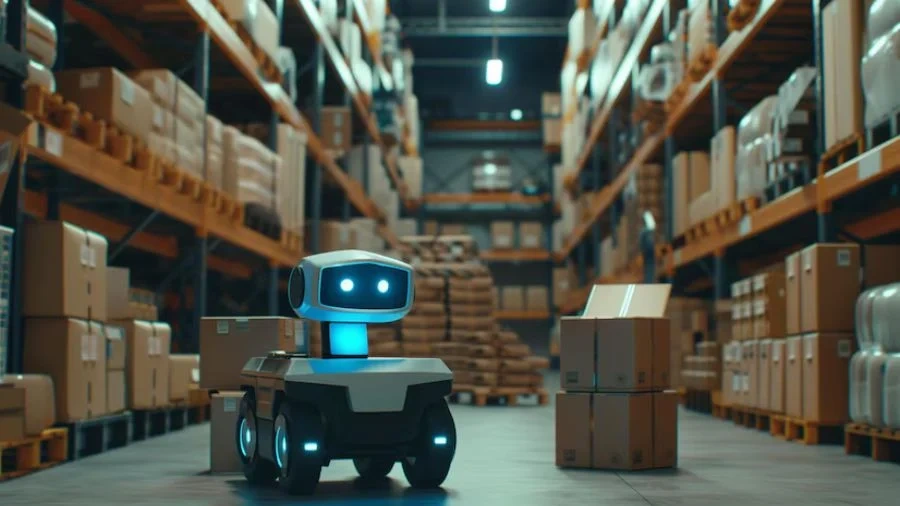
Warehouse automation has grown considerably in importance in recent years, with increasingly versatile robots that can recognize and handle objects of different shapes and sizes. These mechanical assistants are reshaping several aspects of inventory management:
- Autonomous picking robots, including automated guided vehicles (AGVs) and autonomous mobile robots (AMRs), move products efficiently from storage zones to shipping points. Unlike traditional systems, AMRs stand out for their ability to plan routes dynamically and avoid obstacles, which gives exceptional flexibility in changing environments.
- Automated storage and retrieval systems (AS/RS) use automatic cranes or robotic arms to put products away and retrieve them, maximizing storage density while minimizing the footprint. That optimization lets businesses reduce their warehouse space requirements considerably.
According to recent studies, implementing AI and automation has allowed businesses to cut their inventory costs by up to 25%. On top of that, roughly 74% of warehouses are expected to use AI by 2027, which shows how widely these technologies are being adopted.
Real-Time AI Inventory Management
Instant visibility fundamentally changes logistics decision-making. AI-powered systems now make it possible to monitor stock levels in real time across multiple sites, including warehouses, stores and distribution centres. That constant monitoring means you know inventory levels precisely at any moment.
By connecting to systems such as point-of-sale (POS) terminals, AI updates inventory records instantly when products are sold or returned. This synchronization eliminates the information lags that traditionally caused costly errors.
Automated replenishment is another major advantage. Based on predefined thresholds and forecast demand, AI systems place orders with suppliers automatically, cutting manual intervention. This proactive approach effectively prevents both overstocking and stockouts.
AI tools can also use real-time data to optimize warehouse operations, including layout design and order fulfillment processes. Algorithms analyze information on product size, demand trends and turnover rates to recommend the most efficient storage configurations.
Integration with the Internet of Things (IoT)
Pairing AI with IoT creates a particularly powerful combination. IoT devices, connected to artificial intelligence solutions, monitor not only stock levels but also environmental conditions and movement in real time. These sensors send data to AI systems that analyze the information and trigger the necessary actions automatically.
In practice, connected sensors continuously measure inventory levels and transmit that data to a centralized distribution hub. This approach considerably improves decision-making by providing precise information on stock, its location and other crucial parameters.
IoT can also connect to enterprise resource planning (ERP) systems, improving decision-making through better data integration. This link between physical and digital technology gives unprecedented visibility across the entire supply chain.
At CyberPerformance, we support Quebec businesses in implementing these advanced technologies. Our approach stands out for its complete transparency: clients follow the progress of their projects in Asana. Our team of software developers has the expertise to adapt our solutions to every type of platform, whether that is your existing ERP or your WooCommerce, Shopify or BigCommerce online store. That flexibility supports smooth integration into your technology ecosystem, turning your warehouse into an intelligent operations hub perfectly synchronized with your whole logistics chain.
Safety, Maintenance and Operational Efficiency
Safety and maintenance are critical issues in modern warehouses, and areas where artificial intelligence shows its full potential. Beyond inventory optimization, AI profoundly changes how Quebec businesses protect their employees and maintain their equipment.
Monitoring Warehouse Risks
AI-based video surveillance systems are transforming warehouse safety by delivering real-time monitoring paired with predictive analysis. These technologies can detect risky movements and send instant alerts to supervisors, allowing immediate intervention before an accident happens.
Behavioural analysis is a major strength of these systems. Smart cameras identify dangerous postures, unauthorized access to restricted zones and failures to follow safety protocols. Sensors built into safety vests also analyze operator movement and warn workers when their posture creates an injury risk.
AI can also monitor the safe operation of heavy machinery such as forklifts, detect improper use and identify obstacles or people in dangerous zones. That capability effectively prevents accidents in high-traffic areas.
Predictive Maintenance for Equipment
Predictive maintenance is a considerable step forward compared with traditional approaches. AI-powered systems continuously analyze data from sensors installed on equipment (temperature, vibration, pressure, fluid levels) to build detailed models of their health and performance.
These technologies can detect subtle anomalies well before a breakdown occurs. Cameras paired with AI algorithms can identify unusual vibrations or abnormal noises on conveyor belts, for example, flagging needed maintenance before failure.
The economic upside is substantial. Industrial facilities typically lose between 5% and 20% of their production capacity because of equipment breakdowns. With predictive maintenance, businesses cut downtime considerably, optimize costs and extend equipment life.
Fewer Human Errors
AI is particularly good at detecting abnormal behaviour, in both people and machines. Manufacturers and warehouse operators can spot flaws in their workflows far faster than with traditional methods.
Computer vision systems analyze footage from cameras installed in logistics centres to inspect work and catch errors before they cause costly problems such as recalls, returns or rework. This continuous monitoring makes it possible to see immediately if an employee is not wearing the required protective equipment or if a product has a defect.
AI can also automate dangerous tasks, keeping employees out of risky situations. Intelligent robots use algorithms together with cameras and sensors to move hazardous materials while avoiding obstacles.
At CyberPerformance, we support Quebec businesses in implementing these advanced solutions. Our approach stands out for its complete transparency: clients follow the progress of their projects in Asana. Our team of software developers adapts these safety and predictive maintenance technologies to every type of system, whether that is your existing ERP or your online store on WooCommerce, Shopify or BigCommerce.
Integrating AI with ERP, CRM and Online Stores
The effectiveness of an intelligent inventory management system rests fundamentally on how smoothly it integrates with your existing IT infrastructure. To maximize return on investment, AI for inventory management has to work seamlessly with the e-commerce platforms, ERPs and CRMs that form the operational core of the business.
Compatibility with WooCommerce, Shopify and BigCommerce
The power of artificial intelligence for inventory management shows fully when it integrates cleanly with e-commerce platforms. Each platform brings its own technical specifics and integration challenges:
For WooCommerce, we build custom extensions that talk directly to the WordPress core, enabling two-way synchronization of inventory data. That guarantees the stock levels shown on your site reflect exactly what is in your warehouse.
With Shopify, our approach uses the platform's robust API to implement advanced automation. When a sale is recorded, our system instantly adjusts forecasts and triggers replenishment processes if needed.
For BigCommerce, we have built specific connectors that let us plug in sophisticated predictive algorithms while preserving the platform's overall performance.
Connecting to Existing ERP Systems
ERP integration is often the most complex challenge. Even so, our technical expertise lets us build solid bridges to virtually every ERP system on the market, whether hosted on premises or in the cloud.
This connection also considerably enriches the analytical capabilities of your existing ERP. The data your current system generates feeds our AI models, which in turn hand valuable insights back to your ERP for better decision-making.
Customization with CyberPerformance
At CyberPerformance, we position ourselves as genuine allies to Quebec businesses that want to automate inventory management with artificial intelligence. Our approach rests on three fundamental pillars:
First, we build custom solutions that fit your operating reality precisely. Unlike off-the-shelf software, our systems adjust to your existing processes, not the other way around.
Second, our methodology rests on complete transparency. We let clients follow the progress of their projects in Asana, removing the blind spots so often associated with complex technology projects.
Third, our team of software developers has the technical expertise to adapt our solutions to any type of CRM, ERP or e-commerce platform, which guarantees clean integration and tangible results quickly.
Challenges to Overcome When Adopting AI
Despite the many advantages, adopting artificial intelligence for inventory management comes with challenges. Those obstacles are far from insurmountable, but they do call for a methodical approach and proper support.
Data Quality and Centralization
Any AI inventory management solution rests on the quality of the data available. Without reliable, structured information, even the most sophisticated algorithms will produce disappointing results. Data is often scattered across different systems (ERP, CRM, point of sale), which makes building a unified view of inventory harder.
At CyberPerformance, we start every project with a thorough audit of your data sources, followed by a centralization strategy suited to your existing infrastructure.
Implementation Costs
The upfront investment is often a sticking point for Quebec SMBs. Beyond software licences, inventory automation sometimes calls for infrastructure changes and dedicated resources during the implementation phase.
Our modular approach lets you stage that investment while getting tangible results at every step. We also guarantee complete transparency on costs through project tracking in Asana.
Training and Supporting Your Teams
Resistance to change is a major challenge in adopting artificial intelligence for inventory management. Employees used to traditional methods can see these new tools as a threat rather than an ally.
Our team of software developers does more than build custom solutions: we support your teams at every stage of the rollout. On top of adapting our systems to your existing platforms (WooCommerce, Shopify or BigCommerce), we train your people so they become self-sufficient using these tools day to day.
Why Choose CyberPerformance as Your AI Partner in Quebec
In Quebec's technology landscape, choosing the right partner to implement AI in inventory management makes all the difference. Our mission at CyberPerformance is precisely to make these technologies accessible to Quebec SMBs, contrary to the widespread belief that artificial intelligence is reserved for large companies with big budgets.
Custom Solutions for Every Business
Our process starts with a thorough analysis of your current workflows, followed by a precise identification of automation opportunities. Unlike standardized solutions, we build intelligent applications that fit your operating reality exactly. We combine our business expertise with data and artificial intelligence to create tools that genuinely multiply the productivity of Quebec businesses. We often explain to clients that AI is not a technology of the future, but a set of tools already available that can be adapted to their specific needs.
Transparency on Project Progress Through Asana
Transparency is the cornerstone of our approach. We use Asana as our project management platform, an essential tool that lets you see at a glance every task in progress, completed or waiting. That permanent visibility gives you constant access to your project status. Our support also includes live screen-sharing sessions, which add rich visual context to our conversations.
A Development Team Dedicated to Adapting Your Tools
Our AI software development team builds automation features directly into your existing applications, which makes for a smooth transition. We can connect different applications and databases with tools such as Power Automate or Zapier, orchestrating automated workflows that cut errors considerably. We also stay available to answer the specific questions that come up in the day-to-day use of your AI solution. This proven methodology keeps you at the centre of every development stage, so the final solution answers your specific needs precisely.
Conclusion
Artificial intelligence is undeniably transforming inventory management for Quebec businesses. Predictive technologies now make it possible to anticipate demand with unprecedented accuracy, while automation considerably reduces human error and optimizes every part of the logistics process. The economic benefits speak for themselves: lower storage costs, fewer stockouts and a significant improvement in customer service.
That said, adopting these technologies is a challenge for many SMBs. Data quality, upfront implementation costs and resistance to change are real obstacles, and we understand them well at CyberPerformance.
Our team positions itself as an ally to Quebec businesses that want to automate inventory management with artificial intelligence. Contrary to common belief, these technologies are not reserved for large companies with big budgets. The custom solutions we build fit your operating reality and your financial constraints.
Transparency fundamentally defines our approach. We let clients follow the progress of their projects in Asana, removing the blind spots so often associated with complex technology projects. That permanent visibility gives you full control over how your solution is developed.
Our technical expertise lets us adapt our systems to every type of platform, whether that is your existing ERP or your WooCommerce, Shopify or BigCommerce online store. That flexibility guarantees smooth integration into your current technology ecosystem.
The future of inventory management belongs to the businesses that know how to put artificial intelligence to work. Technology alone is not enough, though: expert support makes all the difference. Partnering with CyberPerformance lets you take this technological step with confidence and turn inventory management into a genuine competitive advantage.
Request your free quoteFAQ
Q1. How does AI improve the accuracy of inventory forecasts? AI analyzes many variables at once, such as seasonal trends, local events and weather conditions, to predict demand with high accuracy. That cuts stockouts by 20% to 50% depending on the sector.
Q2. What are the advantages of automating inventory management? Automation enables dynamic replenishment, better use of storage space and lower costs. Businesses generally see a 20% to 30% drop in average stock levels and a 25% to 40% reduction in costs tied to obsolete stock.
Q3. How does AI improve safety in warehouses? AI-based video surveillance systems can detect risky behaviour, unauthorized access and failures to follow safety protocols in real time. They can also monitor the safe operation of heavy machinery to prevent accidents.
Q4. What are the challenges of adopting AI for inventory management? The main challenges are data quality and centralization, upfront implementation costs, and training and supporting teams to overcome resistance to change.
Q5. How does AI integrate with existing systems such as ERPs and e-commerce platforms? Custom solutions can be built to integrate cleanly with existing ERPs and with e-commerce platforms such as WooCommerce, Shopify or BigCommerce. That allows real-time synchronization of inventory data and advanced process automation.
The benefits and improvements cited here (costs, stock levels, stockouts, productivity and so on) depend on many factors: data quality and availability, integrations, internal processes, sector and training. CyberPerformance commits to an obligation of means, not an obligation of result.
The figures, trends and forecasts mentioned are indicative and should be validated against the sources cited (title, date, methodology).
Unless otherwise indicated, international data is presented for information only and does not necessarily reflect the reality of the Quebec market.
Integrations depend on the API capabilities and constraints of third-party platforms. Testing and configuration are required before any automation.
Custom Software Development: Which Part to Build
August 31, 2026
Custom software or an off-the-shelf package? The decision comes down to the slice of your work that falls outside your tools, and to the hours your people spend covering the gap.
Read more : Custom Software Development: Which Part to Build
How to Plan a Custom Software Project When Tech Is Not Your Trade
August 31, 2026
Handing your development firm a clear requirements brief is what lets it grasp your expectations and your context before it quotes your custom software project.
Read more : How to Plan a Custom Software Project When Tech Is Not Your Trade
Moving Company Software for Quebec and Canada
August 13, 2026
MFlow is moving company software that builds online quotes, takes credit card payments and texts your customer 48 hours before the move. On sale at the end of August 2026.
Custom Web Application Development Agency in Québec City and Lévis
August 13, 2026
A custom web application automates repetitive tasks, structures your operations and centralizes your data. Here is how our agile team in Québec City and Lévis designs, builds and scales one with you.
Read more : Custom Web Application Development Agency in Québec City and Lévis
SEO Agency in Québec City: Rank Higher, Win More Local Customers
July 1, 2026
Working with an SEO agency in Québec City is how local businesses climb Google. Inside: audits, keyword research, content, backlinks and 9 years of Quebec expertise from CyberPerformance.
Read more : SEO Agency in Québec City: Rank Higher, Win More Local Customers
360 Virtual Tour Photographer: Immersive Tours for Your Business
July 1, 2026
A Google-certified 360 virtual tour photographer turns your space into an immersive tour published straight to Google Maps, lifting your local visibility, your engagement and your sales.
Read more : 360 Virtual Tour Photographer: Immersive Tours for Your Business

 Get in touch